
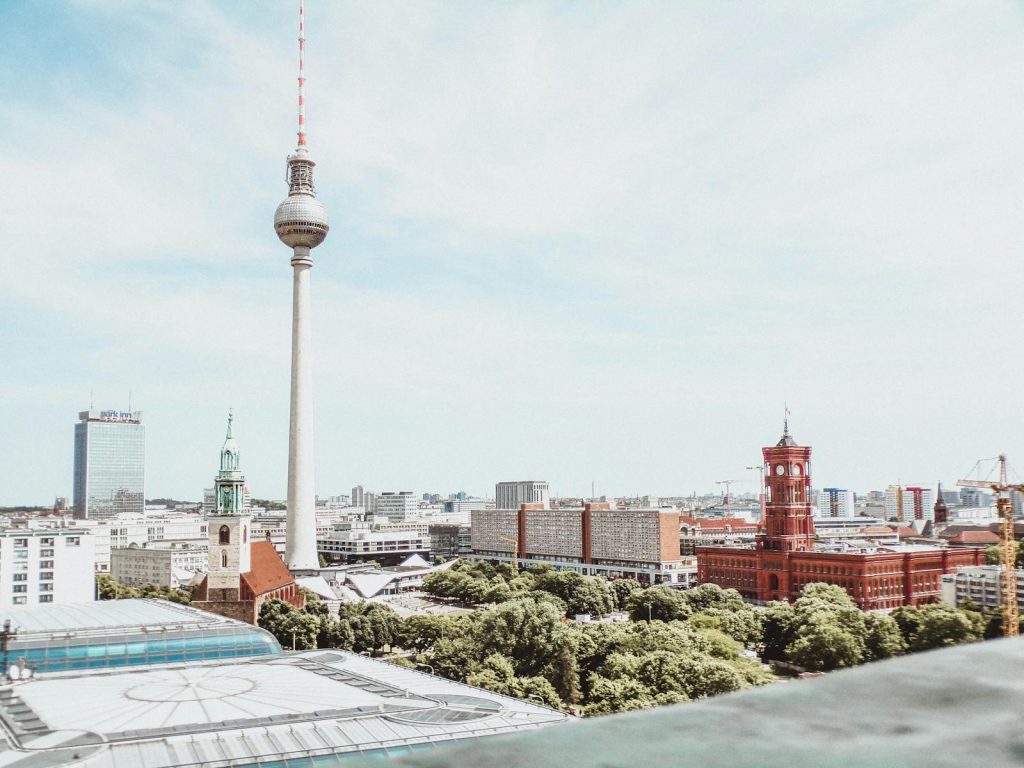
Germany has become the second-most-requested European destination for Indian skilled-worker families after the United Kingdom, driven primarily by the EU Blue Card route. The 2024 amendments to the Skilled Immigration Act made the threshold meaningfully more accessible, and through 2025 and into 2026 we have seen a steady increase in India to Germany moves, particularly to Munich, Berlin, Frankfurt and Stuttgart.
The freight side is straightforward. The bureaucratic side is, well, German — and the single deadline that catches almost every Indian family by surprise is the Anmeldung.
The Anmeldung is a two-week clock that starts on arrival
Germany requires every resident to register their address (Anmeldung) at the local citizens' office (Bürgeramt) within fourteen days of moving in. The slot to actually do this in cities like Berlin and Munich is itself two to four weeks away — meaning the appointment has to be booked before the family lands, in some cases before the lease is signed.
Our standard advice: as soon as the lease is in motion, book the Anmeldung appointment online. The slot can usually be amended; without one, the family lands and discovers the next available appointment is six weeks out, which then blocks the bank account, the tax ID and the residence permit pickup.
The Blue Card timeline
For an Indian Blue Card move, the working sequence is:
- Visa appointment at the German consulate in India (Mumbai, Delhi, Chennai, Bengaluru or Kolkata).
- National D-visa issued, valid usually for three to six months as an entry visa.
- Arrival in Germany.
- Anmeldung within fourteen days.
- Tax ID (Steuer-ID) issued by post automatically after Anmeldung.
- Bank account opened (requires Anmeldung confirmation).
- Blue Card pickup at the Ausländerbehörde, scheduled in the visa packet.
The shipment fits into this sequence at a specific point: after the lease is signed and the Anmeldung is done, but ideally before the Blue Card pickup, because that pickup typically requires the new German address to be confirmed.
Lease before shipment: the German rental market reality
The German private rental market is unlike India or the Gulf. Long-term leases in major cities are highly competitive, landlords ask for a Schufa credit check (which a fresh arrival does not have), and Wohnungsgeber-Bestätigung (the landlord's registration confirmation) is needed for the Anmeldung itself.
Our usual recommendation for an India-origin Germany move:
- Land in furnished or short-term accommodation for the first 4 to 8 weeks. Wunderflats, Housing Anywhere or employer-arranged temporary housing all work.
- Use that period to view long-term apartments and assemble the rental application packet (Mietschuldenfreiheitsbescheinigung is not yet possible — substitute a Schufa-Erstauskunft).
- Sign the long-term lease, Anmeldung within fourteen days of that move-in, then release the shipment from destination warehouse.
This is exactly the kind of move where holding the container in our destination warehouse pays for itself many times over — releasing freight into a permanent address is markedly cheaper than two delivery legs.
Shipping practicalities India to Germany
Sea routing is via Hamburg or Bremerhaven for North Germany, or Rotterdam (Netherlands) with onward truck movement for South Germany. Realistic timelines from India:
- Mumbai or Kandla to Hamburg: 25 to 32 days port to port; door to door 38 to 48 days including German customs and inland delivery.
- Chennai or Mumbai to Rotterdam, onward to Munich or Stuttgart: 30 to 38 days port to port; door to door 45 to 55 days.
Air freight is genuinely useful on this corridor for a small first-30-days consignment — mattresses, basic kitchen, work essentials — while the sea consignment is in transit. Delhi to Frankfurt by air is three to five working days.
What German customs needs
Personal effects for a Blue Card holder are duty-free under the EU's normal residency-transfer rules. The supporting documentation is the German residence permit (or D-visa), proof of residence in India for the twelve months preceding the move, and a Zollanmeldung filing of the inventory. We file this on your behalf and the customs interaction is, in our experience, efficient at Hamburg and Bremerhaven.
School enrolment: the Schulpflicht
Germany has compulsory school attendance from age six. The local school is generally assigned by district once the Anmeldung is complete — this is one of the reasons the Anmeldung sequence matters. International schools (English-medium) exist in all major cities but are paid and oversubscribed; if the family is targeting an English-medium school, register before the move.
For children entering the German state system, the school will typically place them in an integration class (Willkommensklasse or DaZ) for the first few months while German is learned. Indian families who push their children into the state system rather than the international option report this as one of the harder but most rewarding adjustments.
What we do at the German end
For the freight scope, our destination partners in Hamburg, Munich, Berlin and Frankfurt handle the customs filing, inland trucking and unpacking. What we increasingly offer alongside the freight is a soft-landing coordination layer — introductions to a relocation consultant who can run the Anmeldung appointment, the bank account and the school enrolment as a sequenced package while the family concentrates on starting work.
If you are at the consular-appointment stage of a Blue Card move, the time to start aligning the shipment plan to the Anmeldung clock is now — not after the visa is in the passport. A scoping call usually resolves the timing in fifteen minutes.
Found this useful? Share it with someone planning a move.