
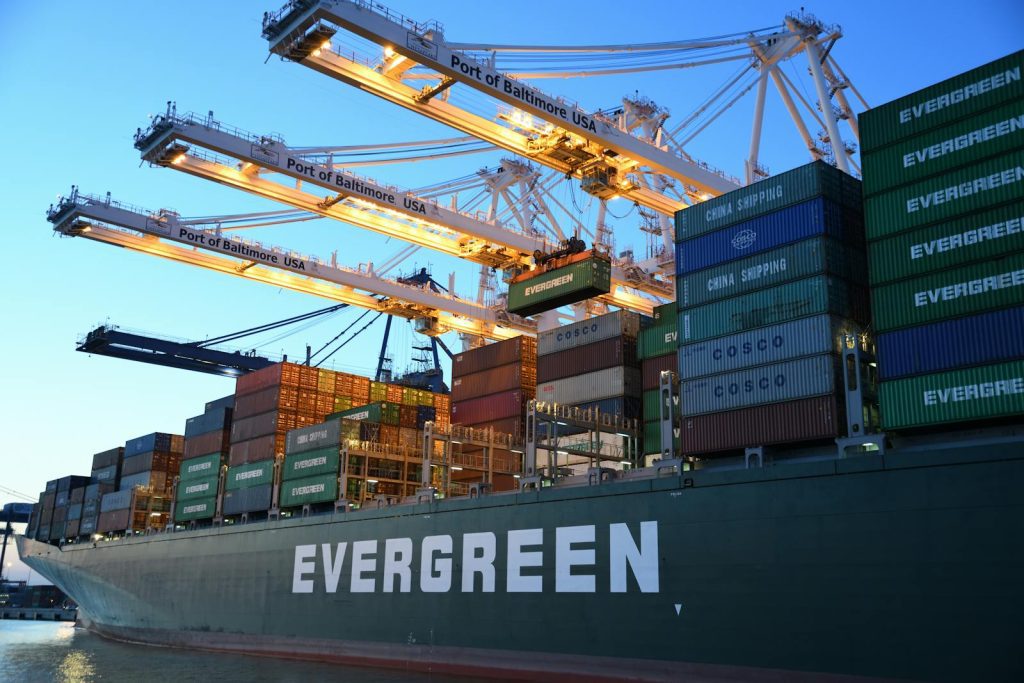
Every international move from the UAE eventually comes down to a single decision: sea freight, air freight, or some combination of the two. The right answer depends on volume, urgency, destination and budget — and the wrong answer can cost a family several thousand dirhams or several weeks of unnecessary discomfort. Our Dubai coordinators have refined a framework over 22 years and more than 1,213 moves. Here is how we think about it.
Sea freight: the default for households
For any household move involving furniture, kitchen contents, books, toys and the full breadth of a family home, sea freight is almost always the right primary choice. The reasons are simple economics: per cubic metre, sea costs a fraction of air on the corridors we serve.
Sea transit times have changed in 2026. Since the Strait of Hormuz closed to commercial shipping in February, containers go by road to a port outside the strait, such as Khor Fakkan or Fujairah on the UAE's east coast or Sohar in Oman, and sailings are longer and less predictable than before. Routing and dates are confirmed at the survey, together with the time needed at the destination for customs clearance and final-mile delivery.
Air freight: the supplement, not the substitute
Air freight from DXB is the fast option on the major lanes. Per-kilogram rates on DXB to LHR, DXB to JFK, DXB to YYZ and DXB to MEL depend on volume, route and seasonality, and are fixed in your itemised quote after the free survey.
For a full household, air is not realistic as the primary mode — it would cost several times the sea-freight equivalent. But for a carefully selected 50 to 100 kilograms of essentials, air freight gives a family functional living conditions in the first week of the move rather than after the sea container arrives.
What we recommend our clients air-freight, in priority order:
- Children's bedding, favourite toys and a few familiar books
- Two weeks of season-appropriate clothing for each family member
- Basic kitchen items: a small set of pots, plates, cutlery, a kettle
- Work laptops, chargers and any essential personal-care items
- Important paperwork (originals carried in hand baggage, copies via air)
The split-shipment economics
A typical three-bedroom Dubai apartment generates 25 to 35 cubic metres of household goods at packing density. Of that, perhaps 50 to 80 kilograms (0.3 to 0.5 cubic metres) is genuinely time-critical. Splitting that small portion onto air freight while the bulk travels by sea is, in our experience, the optimal pattern for any move where the family is landing before the sea container arrives.
How the split might look for a Dubai to London family of four:
- Sea freight (20-foot shared, 25 cubic metres) for the household goods
- Air freight (70 kilograms) for essentials
- Combined total: confirmed in a fixed, itemised quote after the free survey
- Alternative all-air for the same volume: several times the combined cost
The split is the right answer for almost every family with a confirmed landing date ahead of the sea container.
When pure air freight makes sense
Three scenarios genuinely warrant skipping sea freight entirely:
- Single-person professional moves with limited goods: a young expatriate moving to take up a role in London, Singapore or Zurich, carrying clothes, electronics, books and a few sentimental items totalling under 200 kilograms. Air-only can be cheaper than the minimum-rate sea-freight charge once destination delivery is included.
- Emergency relocations: visa-driven moves with hard deadlines under three weeks. Sea freight simply cannot meet the timeline.
- High-value, low-volume shipments: art, jewellery, musical instruments. Air freight reduces handling and transit risk significantly.
What sea handles better than air
Beyond cost, sea freight is markedly better for several categories of goods:
- Liquids: most airlines and destination customs regimes treat liquids carefully on air freight. Wine, oils, certain cleaning products and personal-care items move more smoothly by sea.
- Large furniture: dining tables, sofas, wardrobes. Air freight charges by dimensional weight, which makes bulky low-density items prohibitively expensive.
- Heavy items: gym equipment, white goods, large electronics. Same dimensional-weight issue.
- Anything fragile that benefits from being packed once into a container and not handled until destination unpacking.
The decision tree
Our coordinators ask three questions to settle the mode choice:
- How many cubic metres of goods? (Under 5 cubic metres and the answer might be all-air; above that, sea is the spine.)
- When does the family land at the destination? (If more than four weeks before the container arrives, plan an air-split.)
- Are there time-critical items inside the shipment? (Work equipment, school uniforms, medical devices — these may warrant their own air-freight line.)
For most UAE-origin moves we coordinate, the answer is sea freight as the primary mode with a modest air-freight supplement for week-one essentials. The exceptions are small all-air professional moves and unusually large volumes where a 40-foot dedicated sea container is the only realistic option.
The right mode is not the cheapest one in isolation — it is the one that gets your family living a normal life at the destination on the right date, with the right things on hand. That calculation is what our coordinators do every week.
Found this useful? Share it with someone planning a move.