
The first weeks of 2026 have already shifted what a move from the UAE actually costs and how long it takes. Below is what our Dubai coordinators are seeing on the ground — six concrete changes you should factor in if you are planning a relocation in the months ahead.
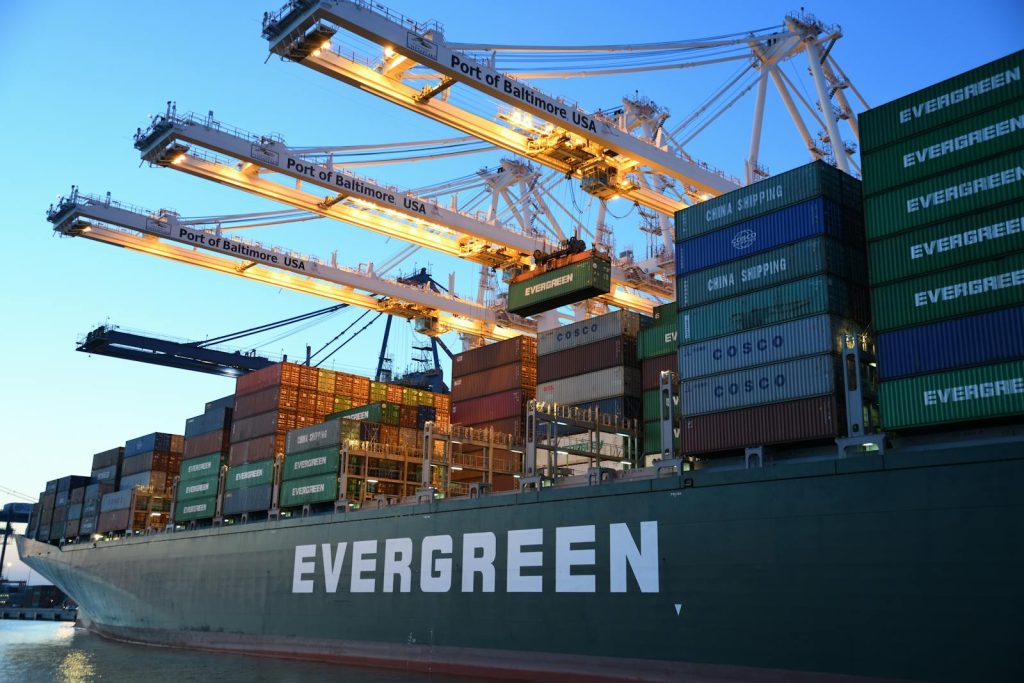
Sea freight rates are softening on the long-haul corridors
After the 2024-2025 surge, container rates on Jebel Ali to Felixstowe, Le Havre, Halifax and Sydney have come back closer to pre-2024 levels. For a typical 20-foot consolidation, this often means a saving of several hundred dollars compared with last summer. The Gulf and Red Sea routes are still pricing higher than historical norms because of insurance and re-routing surcharges, so corridors like Jebel Ali to Mediterranean ports are not yet showing the same relief.
What this means in practice: if a quote you received in late 2025 is more than a few months old, ask for a refresh before committing. Carriers update their rate sheets each fortnight in our experience.
Air freight is becoming a real option, not just an emergency one
Belly capacity on DXB outbound has expanded materially this year, and per-kilo air rates on routes like DXB to LHR and DXB to JFK now sit close to where they were in 2019. For a household move where a family needs essentials in hand quickly while the sea consignment is in transit, splitting 50 to 80 kilograms onto air freight has become a reasonable line item rather than a luxury.
Destination biosecurity scrutiny keeps tightening
Australia, New Zealand, the United Kingdom and Ireland have all added documentation requirements at the point of arrival this year. The practical impact for UAE-origin movers is that household items with any wood, soil residue, or food traces are inspected more rigorously than they were in 2023. Vacuum cleaners need to be cleaned and bagged separately. Garden tools require sterilisation certificates. Wooden furniture must be free of bark and visible insect activity.
None of this is new in principle. What is new is enforcement consistency — inspections that used to be spot-check are now routine on every container from non-EU origin. Build a buffer of two to five extra days at the destination into your move plan for biosecurity processing.
Pet relocation lead times have stretched
Rabies titer slots at the UAE Ministry of Climate Change and Environment-approved labs are running about three to four weeks out for most of the year, with a longer queue in May and September. Combined with destination-side quarantine windows (Australia continues to hold pets at Mickleham for ten days minimum; Ireland requires a tapeworm treatment 24 to 120 hours before flight for dogs), the realistic end-to-end timeline from first vet visit to pet arriving at the new home has stretched to four to six months for non-rabies-free destinations.
If a pet is moving with you, start that timeline running as soon as the destination is decided. The household goods can wait. The pet paperwork cannot.
Customs digital filing is now the default
UAE-side Mirsal 2 declarations and destination-side platforms — UK ToR1, Australian B534, Canadian BSF186, German Form 0350 — are all online-first now. Several countries have deprecated paper-only filing routes that existed as recently as last year. The practical effect is that filings move faster but mistakes become harder to correct after submission. We file every declaration on your behalf and validate against the bill of lading before lodging.
The settling-in service has become more important than the freight itself
This is the trend our coordinators talk about most. The actual logistics — container loaded in Dubai, container arriving at the destination port, customs cleared, delivery scheduled — has become more reliable and predictable than ever. The unpredictable parts of an international move now sit at the destination end: school enrolment cycles, residence-permit issuance, housing-market tightness in cities like Amsterdam, Auckland and Dublin.
For families with children of school age, the constraint that drives everything is no longer freight transit time. It is whether you can land before the destination school year starts.
What is unchanged
One thing has not shifted: a successful move still depends on a single accountable coordinator owning the job from first quote to final delivery. Multi-vendor coordination — separate packers, freight forwarders, customs brokers and unpackers — is where most moves slip. Our model continues to be one Seemleius coordinator end-to-end, with sub-contractors named upfront so you always know who is touching your goods.
If you are planning a move from the UAE this year, the most useful first conversation is a fifteen-minute scoping call with a coordinator. We can usually tell you the realistic timeline, the corridor cost band, and the destination-side gotchas before any paperwork starts.
Found this useful? Share it with someone planning a move.